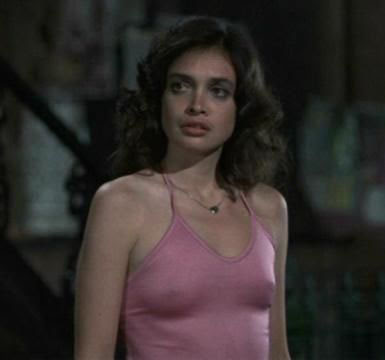
the photography and the silences in this film make you forget to breathe. all the colours are so sombre and reflect the bleakness of the story.
 1961 Forest Gate Methodist Church, London, E.7. The preacher. Diagonal sculpture.


Siobhan Hapaska's sculptures incorporate extraordinary objects from palm trees to buffalo skulls, goat skins to old socks.
They create metaphors reflecting on the fundamentals of life, unearthing the unsaid and the troubling.
Her sculptures of the mid 1990s had highly finished metallic fibreglass surfaces. Her new works reflect on how things have changed since. Their scale is larger than human. Themes of fertility and potential abound in 'Dry Spring' which uses copper pipe and flowers.
Politics, technology, speed, travel and nature are all made reference to, but ultimately you are encouraged to open your minds to the space her sculptures leave for imaginations to take hold.
my heart sang when i first saw slides of her work at a friday event, i can't remember what she said but it was very very important. i think i smiled the whole way through her talk which has never happened before or since.


 Manohla Dargis of the New York Times called the film "so closely tuned to the pulse of communal life, to the rhythms of how people work, play and struggle together, it captures the larger picture along with the smaller. Like Poppy, the bright focus of this expansive, moving film, Mr. Leigh isn’t one to go it alone. Played by a glorious Sally Hawkins — a gurgling, burbling stream of gasps, giggles and words — Poppy . . . keeps moving forward and dancing and jumping and laughing and nodding her dark, delicate head as if she were agreeing not just with this or that friend but also with life itself. She’s altogether charming or perhaps maddening — much depends on whether you wear rose-colored specs — recognizably human and every inch a calculated work of art."
this book is like relish, i can't have enough but its incredible. probably because the characters are completely fabricated. but the sentiments, the nostalgia and hope and despair is all real and from somewhere true.
'The book emulates the celebrity auction catalog (think of the six-volume Sotheby’s catalog for the many personal collections of Andy Warhol and you’re on the right track). The twist is that Lenore Doolan and Harold Morris are fictional characters and their joint possessions, carefully itemized and offered in rough chronological order in the auction catalog, are supposed to reflect the arc of their relationship, beginning with “the first known photograph of the couple together” (Lot 1005) and ending with various lots suggesting two lives going in different directions.
Shapton’s auction catalog mimicry is pitch perfect; her lot descriptions satirize the dead-pan verbiage of the high-brow auction house. And, in fact, Shapton’s “auction catalog” appears to have fooled the Library of Congress, which catalogs the volume not as fiction but in the CT class, or Auxiliary Sciences of History: Biography. Shapton must have had a blast collecting or faking the items to be included in the 332 lots: fake snapshots, tourist postcards, lingerie, clogs, 18 bras for “Lenore” and 18 tee-shirts for Harold, cheesy paperbacks, vintage sunglasses, stuffed squirrels…

On the other hand, Important Artifacts and Personal Property is less successful in giving much depth to the relationship between the two characters. Auction catalog language is deliberately wiped free of emotion and subjectivity, so Shapton often resorts to personal notes, letters, and annotations by Lenore and Harold themselves, buried in the descriptions of the various lots, as a vehicle for depicting the status of their changing relationship. For example, here is Lot 1253:
An unusual chair and a handwritten note
A vintage 1930s leather and oak chair. Good condition, some marking to leather. A note on the back of a receipt for groceries reads: “You said you’d be back at 8, you could have called. Have gone to the movies. here’s your present – Happy Birthday. L 9:45”
24 in. wide x 30 in. high x 18 in. deep
$700-900
The problem, of course, is that most of our personal possessions don’t really say much about us in isolation. (The fact that I have a Hello Kitty mug of Badtz-Maru in my office won’t tell you anything about me unless I tell you the story behind it.) When items in Shapton’s book do point to biographical traits of their owners, the message often seems forced.'
From the http://sebald.wordpress.com/


 in found this website which adds its own tagline on each work.
 miranda july.
 its very funny, here is one of the songs on the album by David Byrne.
 Michael Beck (Swan): Director Hill said that the studio forced him to veer from Yurick's ethnically righteous novel and cast a white actor as Swan. If Swan had to be a white guy, Beck turned out to a four-alarm cream-dream of a choice. Whether it's having the balls to stand up to a power-hungry Ajax or the speed with which he lays the pimp hand down on Deborah Van Valkenberg's Mercy, Beck was armed with enough bitch-slap in his holster for everyone. It might seem strange to anyone who witnesses Beck's powerful presence in The Warriors, but his best post-Warriorswork was in dramatic TV-movies. One would think Beck might have been able to write his own ticket after this star-making turn, but as to the fickle finger of script-choosing, Mike said it best himself: "The Warriors opened up a lot of doors for me. ThenXanadu closed them."