Saturday, April 23, 2011

A torinói ló/ The Turin Horse (2011)

I was recommended to see this film by my Hungarian teacher. We were looking at some Hungarian poetry, by Joszef Atilla, which was extremely sad, to do with loss and emotional poverty.

This film is definitely depressing. There is hardly any dialogue, and it is basically just 6 days in the life of a man, his daughter and his horse. They live in an extremely windy and cold sparsely occupied area of the country. Every day is much the same as the last. One of my favourite parts was watching the father and daughter eating one boiled potato a day, peeling the skin off the hot potato with their fingers, the noise of this action is so desperate and resonant, wet, as they eat in absolute silence, so hungry, but also their dire situation of poverty meaning they wolf some of the potato down, then suddenly lose their appetite and push the plate away.

Every day, the daughter goes out to the well to get the water for the day. With the water she washes and boils the potatoes. On the sixth day, the well is dry, and one of the last scenes is of the father and daughter sitting down to the regular potato dinner. The father bites into it and it sounds like an apple. The film drags you down to the depths of despair, although at no part does it drag. The silences, as the daughter dresses her father daily (he has one paralysed arm) are palpable, as he stares at her while she dutifully but heartlessly dresses him each day.

When they are not eating or dressing, they sit looking out the window or the daughter is looking after the horse. The old horse's health seems to deteriorate with each day. By the sixth day, the horse won't eat or drink. The well is dry, and the horse, their livelihood, is nearly dead. The film ends here.

1889. German philosopher Friedrich Nietzsche witnessed the whipping of a horse while traveling in Turin, Italy. He tossed his arms around the horse's neck to protect it then collapsed to the ground. In less than one month, Nietzsche would be diagnosed with a serious mental illness that would make him bed-ridden and speechless for the next eleven years until his death. But whatever did happen to the horse? This film, which is Tarr's last, follows up this question in a fictionalized story of what occurred. The man who whipped the horse is a rural farmer who makes his living taking on carting jobs into the city with his horse-drawn cart. The horse is old and in very poor health, but does its best to obey its master's commands. The farmer and his daughter must come to the understanding that it will be unable to go on sustaining their livelihoods. The dying of the horse is the foundation of this tragic tale. Written by Anonymous


Tuesday, April 19, 2011

Kind of Change - New Acquisitions 2009-2011

Zofia Kulik/KwieKulik: Activities with Dobromierz.
1972-74 / 2008

Kind of Change - New Acquisitions 2009-2011

March 05, 2011. - May 15, 2011.


Following on the Ludwig Museum’s exhibition, New Acquisitions - Rarely Seen Works (2009), Kind of Change offers a second occasion for the museum to display recently acquired works of art. This overview exhibition can be considered a complete whole together with the rearranged permanent exhibition, Unmistakable Sentences (2010), where many of the newly acquired works have been on view.

One of the reference points of the present exhibition is the statement of Ciprian Mureşan, a young artist from Romania, Communism never happened. This inscription is made of cut-outs from vinyl propaganda audio discs produced during the Ceauşescu-era, thus the text and its physical medium together compose a condensed ambiguity that characterizes the historical and social consciousness, and memory in the region. The majority of the works of art that have been acquired by the museum during the last couple of years are embedded in the texture of the recent past of East-Central Europe and that of its ever-changing present, where questions of artistic forms and existence, and of historically determined artistic products have been constantly and painfully raised.

Self-portraits by András Baranyay, his series of portraits of his artist friend, János Major, the complex Pseudo-system by Gyula Pauer, demonstrations by Endre Tót in the streets of Geneva, or the action by Judit Kele who as a „work of art” put herself onto auction in Paris, the art of Dóra Maurer, or Ilona Keserü are all manifestations of the criticism of the socialist regime, as well as independent artistic and political views expressed in the neo-avantgarde of the 1970s in a latent or explicit way. We could also mention here the series of photograps and its digitalized version by Polish artist Zofia Kulik / KwieKulik, as well as Tamás Szentjóby’s film, Centaur, which was made and prohibited in 1975, and restored in 2009, with the contribution of ACAX, under the auspicies of Ludwig Museum.

The other point of referece of the exhibition is composed of fresh works by a generation of artists who were socialized after the political transition. These works, produced after the turn of the millennium, reflect a society where the heritage of the East-Central European past and the phenomena of global capitalism are simultaneously present amidst constant change. Artists from Romania - Ciprian Mureşan, Mona Vătămanu and Florin Tudor - attempt to work through the history that permeates private life. In her video, Ilona Németh living in Dunaszerdahely, calls attention to the endangered private sphere. British designer, Matthias Megyeri produces „humanized” pieces for safeguarding industry. Czech Kateřina Šedá involves the inhabitants of Tükörhegy, a housing project in Törökbálint, with her „social games”, thus investigating the new ways of life and the visual-built environment of the sleeping districts, while Tehnica Schweiz, the artist duo of Gergely László and Péter Rákos, investigates the special hsitorical consciousness manifested in the activity of the community of artillerymen keeping guard over the legacy of traditions.


Exhibited artists
András Baranyay, Attila Csörgő, Pál Gerber, Tibor Hajas, Judit Kele, Ilona Keserü, Little Warsaw, Gergő Kovách, Zofia Kulik / KwieKulik, Dóra Maurer, Matthias Megyeri, Ciprian Mureşan, István Nádler, Ilona Németh, Gyula Pauer, Péter Rónai, Kateřina Šeda, Ágnes Szabó, Tehnica Schweiz, Endre Tót, Mona Vătămanu and Florin Tudor, Gyula Várnai, Tamás Waliczky.

Curated by Krisztina Szipőcs

Saturday, April 9, 2011

Andrassy


These pictures are from a march I heard out of my window. It was so loud, on one of the main boulevards in Budapest. At first it took me a while to figure out what the march was about. There were hardly any young people, which was the first thing I found unusual. Most protests/ marches have a lot of young people in the ranks. The people in the marches went back up the boulevard about 1 kilometre. It was a march of lots of different countries trade unions, with t'shirts, banners, megaphones, whistles etc. Everyone had cameras. There were lots of journalists photographers, but so many of the people taking part in the march were recording and taking pictures constantly. I wanted to make some record of my own.
The videos here are a couple I made on the day. The first is of an elderly lady dancing to the band set up on the stage where there were speakers from the trade unions. She wasn't marching. I think she was Hungarian and possible homeless. I don't think she was involved with the march, she was just enjoying the music and the crowd. The other video is of a piece of police tape fluttering in the wind, to the music.


Sunday, April 3, 2011

Friday, April 1, 2011

balance
raft
desperate
escape
fear
hope
travel
endurance
choice

If the world was due to end with a great flood, but there was a good chance you could survive with a place in a cruiseliner, but the rest of your family choose to get on a space ship, not to return for twelve years, how do you decide what to do? Weird. heartbreaking.


thinking about rafts. travelling 'homes', temporary escape, to safety.

hiding homes

noah's ark found - http://www.squidoo.com/noahsarkfound
escaping from the world, how do you choose to go? especially into space? the next noah's ark:

Thursday, March 31, 2011

Wednesday, March 16, 2011

“If something is boring after two minutes, try it for four. If still boring, then eight. Then sixteen. Then thirty-two. Eventually one discovers that it is not boring at all.”
John Cage

Jay Needham


Opened.
2007
I dug out my old stamp collection and remembered that it was not really mine, but someone else’s. It consists of a shoe box of loose stamps from around the world, cancelled and therefore of no value to the real collector. I kept it through the years though, somehow protected it and also began to imagine a correspondence, a fiction that spoke about travel using my own footage, writings and sounds.
The piece is a continuation of the work that started with 13 buildings and features spare recounting of a monolouge left on an answering machine. OPENED relates to 13 buildings, but neither is the first in the series. The sounds gathered for this piece are of Spring rainstoms in Southern Illinois.


Jay Needham is an artist, radio producer and composer whose sound and visual works are often concerned with the politics of borders and acts of listening. Although he primarily centers his creative and critical practice on radio and the transmission arts, screenings of his video series on memory and architecture have appeared at festivals and conferences worldwide. 13 Buildings premiered at the 9th. Videomedeja in Serbia with additional screenings at the Sydney Opera House during d/art 2006. The series has been distributed by the Centre for Art and Technology, Finland on the DVD Flux Vol.1 and Vol. 2. The second installment titled OPENED screened at the VIBGYOR Film Festival in Kerala India and during the Simultan Video and New Media Art Festival in Timisoara, Romania.
His radio documentary Listening at the Border was a special presentation during Sonic Interventions at The University of Amsterdam in 2005. Broadcast on numerous NPR stations in the United States, the work traces several years in the life of an NSA sound spy. Additional programming events include Chicago’s Steppenwolf Theatre and during Radiotesla as a part of War, at Tesla im Podewils Palais, Berlin, Germany.
Other works include his micro radio work There and Back performed and aired as a part of Particle/Wave during Pixel Ache 2005 at The Kiasma Museum of Contemporary Art in Helsinki and the recently installed Tell Us Your Secrets during Waves, curated by RIXC and Armin Medosch at The Latvian National Museum of Art, Riga 2006.
A Slow Crash, his narrative work for radio, aired and streamed as a part of New Media Scotland’s Resonant Cities program and was released on Deep Wireless II in 2005 by New Adventures in Sound Art.
Jay is a frequent collaborator with The Association Panamericana para la Concervacion, a rainforest conservation NGO based in The Republic of Panama.
Writings and selections of his sound works will be published in 2007 in Hearing Places edited by Ros Bandt. Cambridge Scholars Press. (In press)
He is currently producing, researching and composing a radio feature on his family’s relation to the origins of the atomic bomb. A live FM performance of that work will premiere in Brussels in October during The Radiophonic Biennale. Needham holds an MFA from The School of Art at California Institute of the Arts. Jay teaches courses in Sonic Arts, in the Department of Radio–Television, College of Mass Communication and Media Arts at Southern Illinois University Carbondale.


Sunday, March 6, 2011

Emma Cummins


Etienne Chambaud

Le Comble du Comble

(The Height of the Height / The Full of the Full / The Epitome of the Epitome)

Framed spray paint on paper

56 x 44 cm each

Unique

2007

Two of the pages that served as an underlay during the spay painting of the documents, notes and drawings in Le

Comble


Pour une exposition, Étienne CHAMBAUD avait sprayé de noir ses notes préparatoires, et exposé le résultat, brouillant ainsi ses pistes de travail. Le comble du comble est formée des deux pages qui se trouvaient sous ces notes quand elles ont été sprayées, et qui constituent en quelque sorte le négatif du processus de création.

some sort of translation....

The Roof space of Roof space For one exhibition, Steven CHAMBAUD had sprayéd black his preparative notes, and displayed the result, blurring his working lanes so. The roof space of roof space is formed by both pages which were under these notes when they were sprayéd, and that constitute in a way the negative of the process of creation.


Thursday, March 3, 2011

Wet Nursing in Europe

European Aristocracy

  • By the 11th century, the aristocracy and royalty of Europe used wet nurses almost exclusively. In taking the baby from the mother, they prevented her from experiencing the birth control effects of producing milk and nursing. This allowed the women to stay fertile and produce more babies. It also left them open to sexual activity with their husbands as having sex with a nursing mother was considered taboo and harmful to the health of the baby. In France, the custom was to send infants to the country for wet nursing. However, by the end of the 18th century in France, the urban poor had also begun to send their babies out of the city so that the mothers could work. In fact, in 1780, only 700 babies out of 21,000 born that year nursed from their mothers. This high demand for wet-nurses caused quality to go down and infant mortality to rise.

  • Wet Nursing and Bourgeois Values

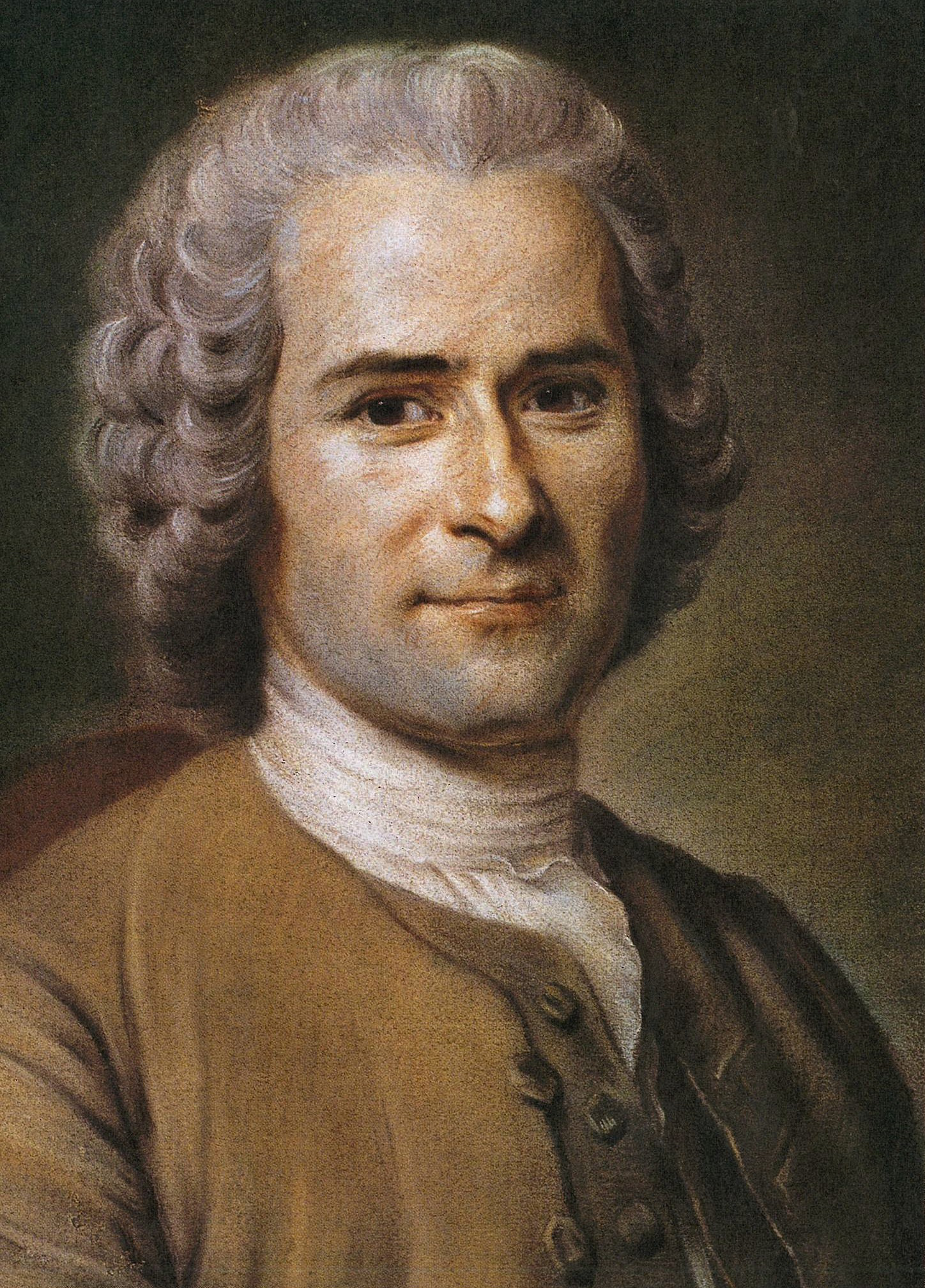
  • Because the Netherlands didn't have a court life like other European countries, their cultural ideals tended to revolve around the bourgeois lifestyle. This included a rejection of the aristocratic advocacy of wet nursing. Instead, the Dutch promoted an ideal focused around an immaculate household centered around the nursing mother as a part of civic responsibility. In fact, Pieter de Hooch and other Dutch painters documented these values burgeoning in the 17th century. The Enlightenment and the French Revolution then introduced some of these same ideas to the rest of Europe in the 18th century. Jean Jaques Rousseau himself denounced wet nursing in favor of nursing by the mother. However, only some people in the upper middle class changed their habits, and, despite the critiques of a few political radicals and women's rights defenders, wet-nursing remained popular in England through the Victorian Era and in France until World War I.

  • Decline of Wet Nursing

  • At the beginning of the 20th century, a comprehensive study by the French government showed that wide spread wet-nursing was contributing to infant death rates. This empirical information, which coincided with the development of new technology, initiated a change towards bottle feeding. The inventions of the rubber nipple, the bottle, pasteurization, and canned milk all made this new method of feeding possible and helped seal the decline of wet-nursing.

  • Breast Pump


    Wednesday, March 2, 2011


    rousseau

    wet nurses

    breast pumps

    copper

    armour

    Yves Klein- Fire Paintings


    Followers